

When the world’s wealthiest individuals seek to immortalize their success, they almost always turn to the Seine. It is a phenomenon that defies economic crises and spans the centuries.
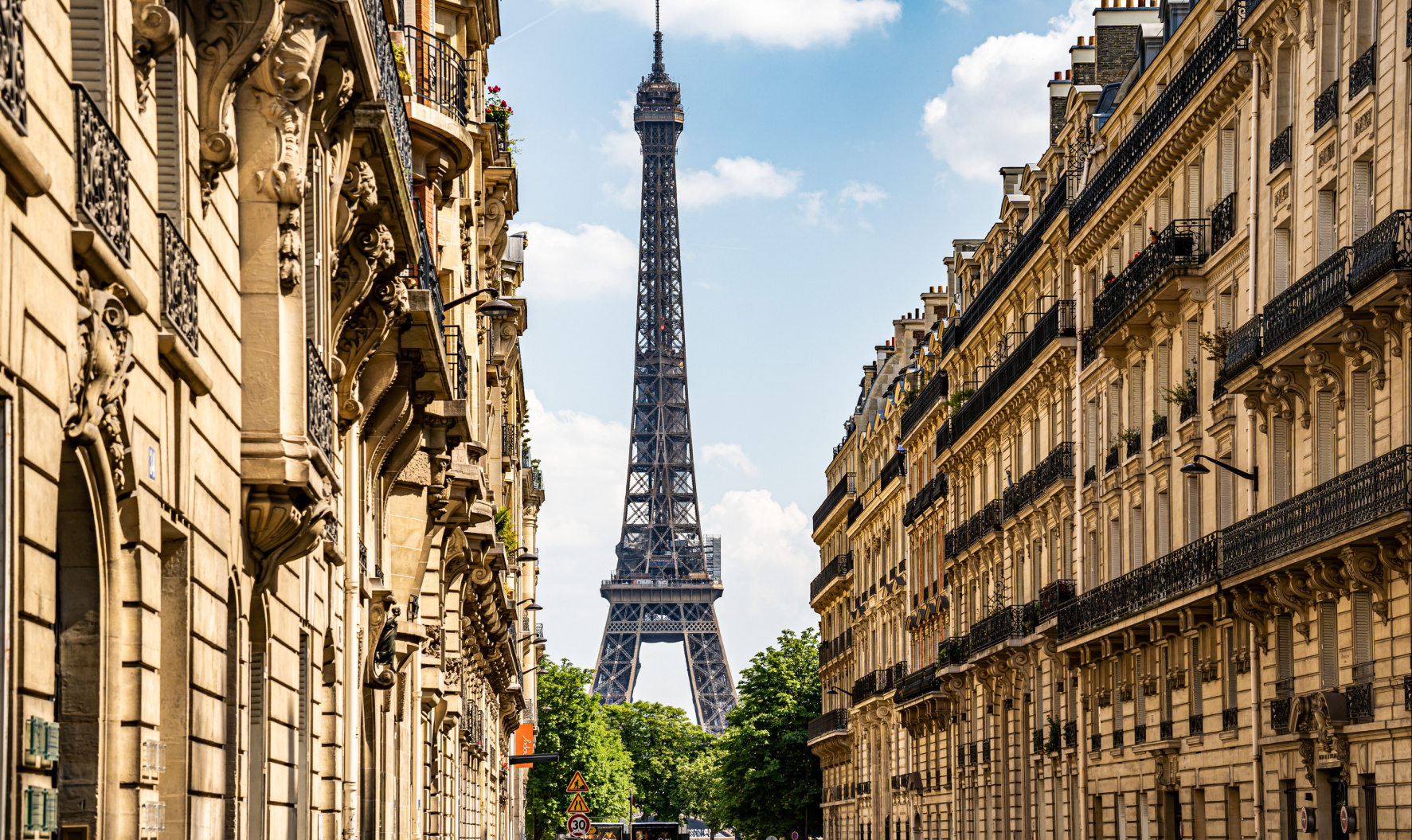
There are cities you buy, and others you conquer. Paris belongs to the latter category. For centuries, the French capital has exerted a pull on the world’s wealthiest individuals that owes almost nothing to rental profitability or market returns, and almost everything to desire, prestige, and the symbolic power of a name on a Parisian notarial deed. Owning a Haussmann-style apartment on Rue du Faubourg Saint-Honoré or a private mansion in the 7th arrondissement is to affix a seal of excellence to one’s life journey.
In 2025, the trend has not slowed down. Our colleagues at prestigious real estate agencies all report the same reality: a steady influx of ultra-high-net-worth buyers from all corners of the globe—the United Arab Emirates, the United States, the United Kingdom, Brazil, and now the Persian Gulf and Southeast Asia. For them, Paris is not just an investment. It’s a statement.
“ “My clients never ask about rental yield first. Their first question is: Does the address make an impression?” ” confirms Maxime, at LUXURYPROPERTIES.FR
The Geography of Desire
The Parisian luxury market follows a precise, almost unchanging pattern. The Golden Triangle—bounded by the Champs-Élysées, Avenue Montaigne, and Avenue George V—alone accounts for a disproportionate share of seven-figure transactions. The 6th and 7th arrondissements, with their quiet streets and pale stone facades, embody French excellence in its most intimate form. The Île Saint-Louis, this extension of the medieval city surrounded by the Seine, offers an absolute rarity: a fictional address, a setting that even novels sometimes dare not invent.
What affluent foreign buyers are looking for is not just a home in Paris. It’s a sense of belonging. Belonging to the City of Light means becoming part of a history of elegance that dates back to Versailles, the Enlightenment, Proust, and Coco Chanel. It means having a pied-à-terre in the world capital of style—a title that Paris defends with remarkable tenacity, even in this age of hyperconnectivity.
Lifestyle as a Selling Point
In annual studies on the preferences of ultra-high-net-worth individuals (UHNWIs), Paris consistently ranks among the top cities—not for its financial performance, but for what analysts euphemistically call the “ premium lifestyle .” Three-Michelin-starred cuisine, century-old fashion houses, an unparalleled concentration of museums, opera houses, and cultural institutions: Paris offers a cultural experience that no other metropolis can fully replicate. London remains a financial hub. New York remains ambitious. Dubai remains spectacular. Paris, however, remains Paris.

This uniqueness is reflected in the numbers. The price per square meter in the most sought-after districts rose by nearly 12% between 2023 and 2025, weathering the interest rate hikes that have weakened other European markets. Foreign buyers, who often pay in cash, are free from credit constraints and maintain constant pressure on the most exclusive segments.
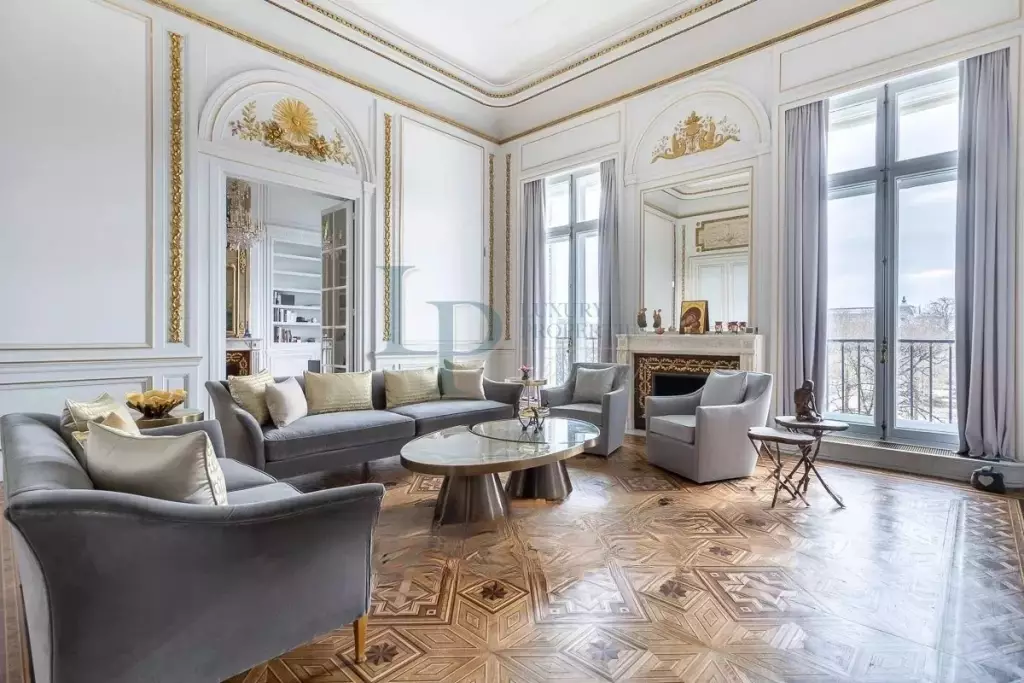
The effect is paradoxical: the more expensive Paris becomes, the more desirable it is. Its very inaccessibility is part of its prestige. A 300-square-meter Haussmann-style apartment in the heart of the 8th arrondissement, priced at nine million euros, is not exorbitant for those with the necessary wealth; it is, in fact, the price of belonging.
“ “Paris is the only city in the world where your apartment’s address can change the way people view you in any living room around the world. ” an American investor, who has owned a property in the 6th arrondissement since 2019, told us a few weeks ago.
The Silent Passport to Success
Beyond the buildings themselves, owning Paris means having a language. A language understood without translation by the wealthy elite across five continents. When a Saudi entrepreneur, a Brazilian heiress, or a tech entrepreneur from Singapore mentions their apartment on Avenue Kléber, no explanation is needed: the social signal is immediate, universal, and timeless. Paris functions as a code shared by a transnational elite who, for the most part, do not always speak the same language.
This function as a status symbol goes far beyond real estate alone. It encompasses education (enrolling one’s children in France’s prestigious universities), healthcare (Parisian private clinics attract an international clientele), culture, and gastronomy. Paris is a complete ecosystem of prestige, of which the apartment is merely the visible centerpiece.
Crises change nothing—or very little. Pandemics, geopolitical tensions, inflation: with every upheaval in the world, a segment of the international clientele rediscovers Paris as a safe haven—not a financial one, but an existential one. There is something about this choice that transcends economic calculation: a faith in permanence, in the idea that Paris will still be Paris a hundred years from now, even if the rest of the world has been reshaped.
A monarchy of taste that refuses to abdicate
Some observers regularly predict the emergence of a new global capital of luxury: Milan, Dubai, Tokyo, Miami… Each of these cities has forged its own identity, won over its elite, and developed its own codes. But none has yet managed to seize the symbolic foundation that Paris has built over several centuries. Fashion, gastronomy, architecture, philosophy, the arts: France has exported its standards of excellence throughout the world, to the point where Paris has become the universal benchmark of refinement.
For wealthy foreigners, buying property in Paris means acquiring a share of this benchmark. It means inscribing one’s success into a collective narrative that transcends the individual. In a world where wealth can be generated in just a few years by an algorithm or an initial public offering, Paris offers what money alone cannot buy: cultural legitimacy, a certain patina, and historical depth.
The City of Light is therefore not just a destination—it is an institution. And like all great institutions, it draws its strength not from what it offers today, but from what it has always represented. For elites around the world, Paris remains what it has always been: the place where success finally reveals its most beautiful face.
Richard Bellanger – LUXURYPROPERTIES.FR
